
Essential Steps to a Disaster Recovery Plan for Nigerian Businesses
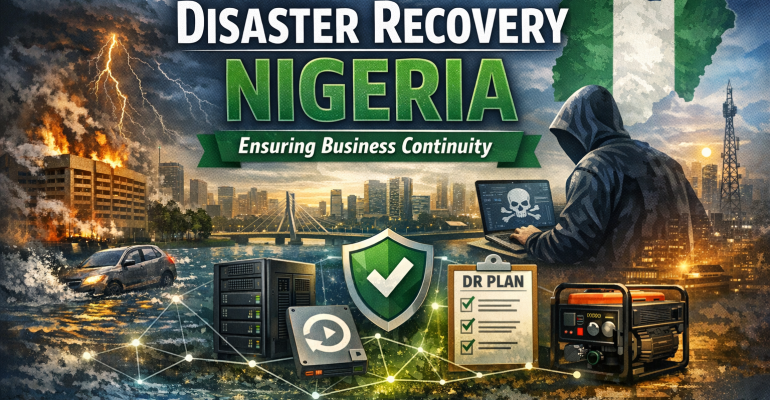
Essential Steps to a Disaster Recovery Plan for Nigerian Businesses
 Lagetronix
Essential Steps to a Disaster Recovery Plan for Nigerian Businesses
Every business in Nigeria is vulnerable to disruptions—from power outages and server crashes to cyberattacks and even natural events. Without a solid disaster recovery (DR) plan, a single incident could bring operations to a halt, leading to lost revenue, damaged reputation, or even business closure. This comprehensive guide explains how to build an effective disaster recovery plan tailored to Nigerian businesses, ensuring business continuity no matter what comes your way.
Why Disaster Recovery Planning Matters in Nigeria
Nigeria’s dynamic business environment comes with unique challenges that make disaster recovery planning crucial. Frequent power outages and voltage fluctuations can damage hardware or cause data corruption. Internet connectivity issues, especially outside major cities, might disrupt cloud services. The country’s growing cybersecurity threats—like ransomware, which is rising across Africa—can cripple companies that aren’t prepared. Local regulations also increasingly emphasize data protection and availability (for instance, the NDPR – Nigeria Data Protection Regulation – expects organizations to safeguard personal data and ensure its availability).
In essence, no organization is immune to disasters. Having a plan means you can respond quickly to incidents and maintain operations. In fact, a well-crafted DR plan can be the difference between quickly recovering from downtime or facing prolonged closure. It also assures customers, regulators, and partners that your business is resilient and trustworthy.
Key Concepts – RTO, RPO, and Business Continuity
Before crafting a plan, it’s important to understand two critical metrics in disaster recovery: Recovery Time Objective (RTO) and Recovery Point Objective (RPO). RTO is how fast you need to restore operations (e.g., “we must be back up within 4 hours”). RPO is how much data you can afford to lose (e.g., “we can only lose at most 30 minutes of data”). For instance, a Lagos fintech startup handling real-time transactions might set an RTO of 1 hour (very quick recovery) and an RPO of near 0 (no data loss), whereas a small trading company in Abuja might accept an RTO of 24 hours and an RPO of a few hours.
These targets guide the choice of backup and recovery strategies—tighter RTO/RPO require more robust (and often more costly) solutions. They also tie into business continuity planning: Disaster recovery (focused on IT systems and data) is a subset of the broader business continuity plan (which covers all aspects—people, facilities, communications—to keep the business running). Aligning DR with business continuity ensures that IT recovery supports overall operations during a disruption.
Essential Steps to Develop an Effective DR Plan
Building a disaster recovery plan might seem daunting, but breaking it down into clear steps helps. Here are the essential steps, with considerations for Nigerian businesses:
1. Perform a Risk Assessment and Business Impact Analysis (BIA).
Start by identifying what could go wrong. List potential disaster scenarios: hardware failure, malware attack, building fire or flood, extended power outage, civil unrest, etc. For each scenario, assess how it would impact key business functions. A Business Impact Analysis involves looking at each critical system (e.g., finance software, customer database, website) and estimating the effect of downtime on operations and finances. For example, if your online store goes down for a day, what is the revenue loss and customer impact? This analysis helps prioritize which systems need the fastest recovery. In Nigeria, consider scenarios like week-long fuel scarcity affecting generator power, or a fiber cut impacting internet connectivity. These local factors should be part of your risk assessment.
2. Define RTO and RPO for Each Critical System.
Using insights from the BIA, establish realistic RTO and RPO goals for your systems. For instance, your core transaction database might need RTO 4 hours/RPO 15 minutes, whereas a less critical HR system could have RTO 48 hours/RPO 24 hours. Engaging business leadership in setting these priorities is vital—they must understand the costs and trade-offs. Local compliance requirements or industry standards may influence these targets; for example, banks regulated by the Central Bank of Nigeria (CBN) often have strict uptime and data protection requirements, effectively mandating shorter RTOs.
3. Create a Data Backup Strategy to Meet RPO.
With RPO in mind, determine how you’ll back up data. This is the backbone of disaster recovery. Some considerations:
- Backup Frequency: To achieve a given RPO, schedule backups accordingly. E.g., for RPO 1 hour, you might run hourly incremental backups. Nigerian SMEs often start with nightly backups (RPO ~24h), but high-availability businesses may require near-continuous data replication.
- Backup Types & Media: Use a combination of full image backups and file-level backups as needed. Store backups on reliable media: external drives, network storage, or cloud. Many Nigerian firms maintain onsite backups for speed and off-site backups for safety (e.g., copying to a secure cloud repository or physically moving drives to a different location).
- Retention Policy: Decide how long to keep backups. A typical policy might be “daily backups retained for 30 days + monthly backups for 6 months”. This ensures you can recover older data if needed. Also consider immutable or read-only backups (backups that cannot be altered or deleted by malware) for ransomware protection (more on that in the next blog post).
- Data Encryption & Security: Encrypt backup data to prevent leaks, especially if storing off-site or in the cloud. Regulatory guidelines like NDPR emphasize safeguarding personal data, which includes your backups.
4. Design a Recovery Solution to Meet RTO.
Next, plan how you will restore systems within the RTO targets:
- Identify Recovery Methods: Will you restore from backups onto the original hardware, or have spare servers ready? Some businesses invest in hot standby systems or cloud-based recovery sites. Others rely on quickly procuring new hardware and then restoring backups. If internet connectivity is a concern for downloading backups from cloud, ensure you have at least one local backup copy for faster restore.
- Define DR Environments: If a primary data center or server room goes down, where will you recover? Options include a secondary site (e.g., another office or a rented data center space in Lagos/Abuja) or a cloud DR environment (spin up servers on AWS/Azure). For example, after identifying that an on-site server failure is a big risk, a trading company in Ikeja might arrange a deal with a local data center to provide emergency server hosting on short notice.
- Recovery Procedures: Document step-by-step procedures for different scenarios. A recovery playbook might include: “If main server fails, use the last known good backup from the NAS to restore to backup server; update DNS settings to point to new server; notify staff of temporary system.” The more specific and rehearsed these steps, the faster the recovery.
5. Document the DR Plan and Assign Roles.
Write down the entire plan in a clear, structured document. Include:
- Emergency Contact List: Key personnel with roles (e.g., IT lead, management, external vendors like generator technicians, cloud support contacts). For example, list the contact info of your generator maintenance provider—if a power surge knocks systems offline, immediate generator support might be crucial.
- Roles and Responsibilities: Who declares a disaster? Who leads the IT recovery? Who communicates to staff/public? In a Nigerian context, ensure backups of responsibilities too (e.g., if one person is unreachable due to network issues, who is the alternate?).
- Detailed Recovery Procedures: The step-by-step actions for different disaster types (cyberattack, hardware failure, etc.). Use simple language and include any needed credentials or where to find them (secured appropriately).
- Resource Inventory: Hardware, software, network configuration details—so you know exactly what environment to rebuild.
By documenting thoroughly, even if key IT staff are unavailable during a disaster (e.g., if it happens during a holiday or off-hours), others can follow the plan. This documentation also demonstrates to auditors or clients that you have a formal DR plan.
6. Test the Plan Regularly and Update It.
A DR plan isn’t “set-and-forget” – it must be tested and updated. Conduct regular drills or simulations. For example, do an annual simulation where you pretend the primary server is lost and actually practice restoring on a backup system. Or quarterly, perform a test where you recover a random file from backup to ensure backups are working (“fire drill” for IT). In Nigeria, where systems and conditions can change quickly (new staff, new software, changes in power or ISP arrangements), testing ensures the plan is up-to-date. Testing also helps uncover gaps (maybe a backup wasn’t capturing a critical database, or recovery took longer than expected). After each test, update the plan with lessons learned.
Planning to Execution – Don’t Go It Alone
Building a disaster recovery plan is both a strategic exercise and a technical challenge. Many Nigerian businesses, especially SMBs, don’t have dedicated continuity planners or DR specialists in-house. This is where partnering with experts can help. For example, Lagetronix Nigeria Limited works with organizations to develop and implement tailored DR plans. We combine consulting on business continuity (helping define RTO/RPO, creating the DR runbooks) with technical execution (deploying backup systems, off-site replication, failover solutions). With local expertise on Nigerian infrastructure and global best practices, working with a partner like us can fast-track your DR readiness.
We’ve seen that companies with a solid, tested plan can recover from disasters in hours instead of days. No plan guarantees zero impact, but doing nothing guarantees a much worse outcome when disaster strikes. The time to prepare is now, not after the outage has happened.
A robust disaster recovery plan is an investment in your business’s survival and success. It ensures that when adversity strikes—be it a server meltdown, a flood at your office in Victoria Island, or a ransomware attack—your team knows exactly what to do to keep operations running. The steps outlined above provide a roadmap to crafting a plan that fits your unique needs and Nigeria’s operating environment.
Don’t wait for a disaster to test your readiness. Start developing or refining your DR plan today. If you need guidance or want an expert review of your current backup and recovery setup, Lagetronix is here to help.
Protect your business before the next disaster hits. Contact Lagetronix for a free Disaster Recovery assessment or consultation. Together, we’ll ensure your continuity plan is rock-solid and tailored to the realities of Nigeria’s business landscape.
Contact Us today for a free consultation to:
- Assess your current backup system
- Improve recovery readiness
- Deploy cloud and hybrid backup solutions
- Protect your servers and business data
- Build a disaster recovery strategy
Protect your business before disaster strikes.
📞 Call: 02018870084, 02018880031, 0802 290 7805
📧 Email: info@lagetronix.com
🌐 Visit: https://lagetronix.com
9 Olaiya St, opp. Governor’s Avenue, Alausa, Ikeja 101233, Lagos, Nigeria


